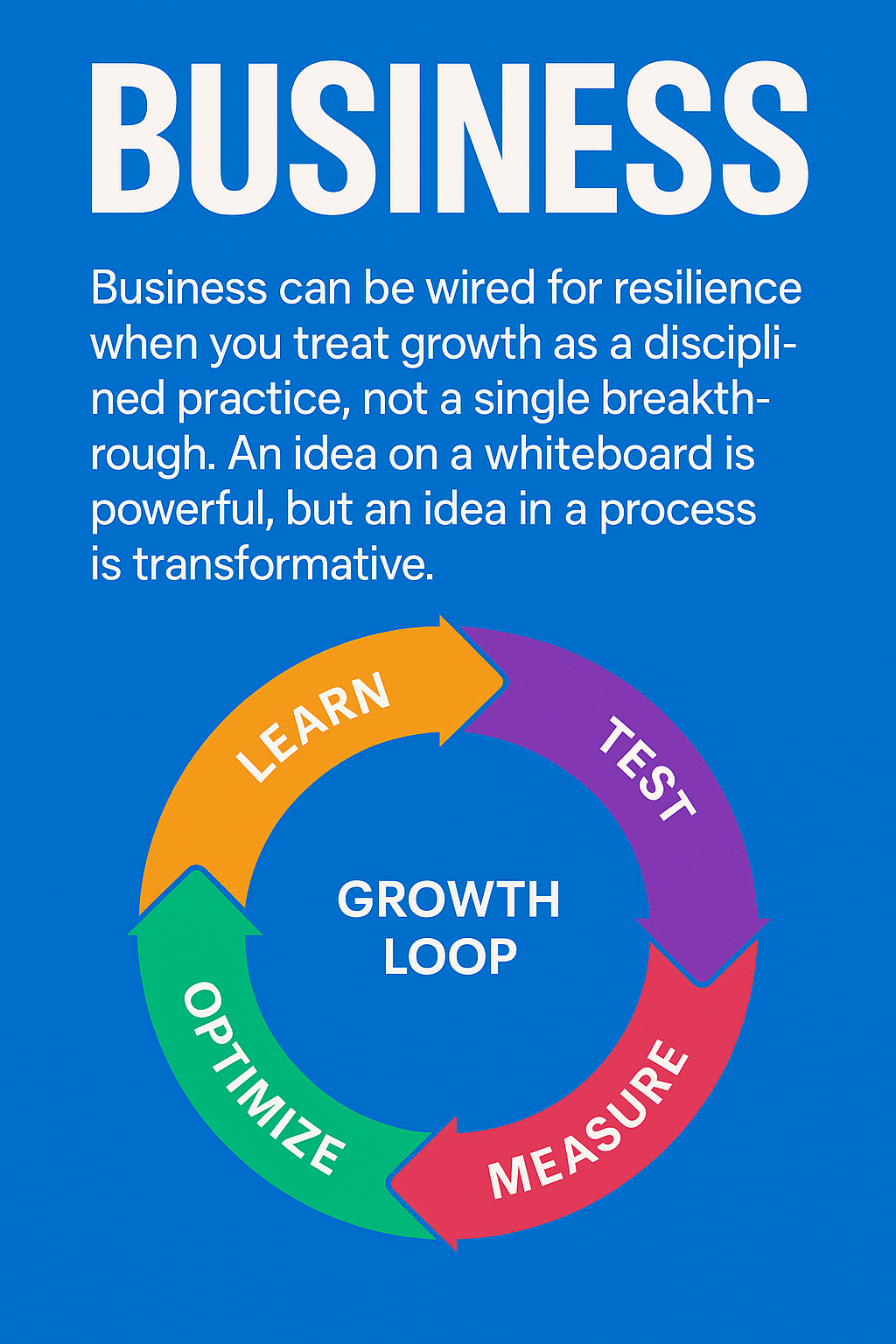
Businesses can be wired for resilience when you treat growth as a disciplined practice, not a single breakthrough. In today’s fast-moving environment, success hinges on clarity of purpose, a practical plan, and the habit of turning insights into action. An idea on a whiteboard is powerful, but an idea in a process is transformative. That means designing routines that turn strategic intent into customer value, consistently over time. First, lead with value. Customers don’t buy products or services; they buy outcomes, relief from pain, or the promise of better futures. The most durable growth comes from understanding a real problem deeply, validating it with real people, and then mapping every step from awareness to advocacy. This is the core message behind the idea-to-impact approach: growth isn’t a one-off launch; it’s a repeating sequence of discoveries, experiments, and refinements that compound. If you want to scale, you must codify what works and ruthlessly prune what doesn’t. Create a simple growth loop: learn, test, measure, optimise, repeat. Make the loop visible to your team so every function, sales, marketing, product, and customer success can contribute. Second, adopt growth habits that scale. The referenced piece on From Idea to Impact emphasises habits that turn concepts into impact: dedicating time to daily learning, interviewing customers to uncover unmet needs, running small experiments with clear hypotheses, tracking the right metrics, and delivering iterative improvements. Practically, this means setting a weekly cadence for field conversations with customers, designing experiments with defined success metrics, and documenting outcomes so learnings persist as you grow. It also means recognising when to pivot when data reveals you’re optimising the wrong thing, not just working harder on the right thing. Growth is rarely glamorous; it’s often a sequence of purposeful, incremental adjustments that yield compounding results. Third, align marketing with business strategy in a way that doesn’t rely on luck. When thinking about channels like Instagram or other social platforms, the core idea remains: tell a consistent story, demonstrate tangible value, and make every engagement count toward a measurable objective. For teams exploring Instagram marketing ideas, focus on clear content pillars, authentic storytelling, and value-driven calls to action. Consistency beats intensity over time, and authentic, client-centric messaging beats glossy but generic campaigns. Use data to refine your approach: which posts move people to take a next step, which formats (video, carousel, or text) resonate with your audience, and what cadence maintains awareness without fatigue. Validating these patterns should come from user feedback, engagement metrics, and conversion data, not opinion alone. Fourth, leverage credible signals and tools to stay ahead. In a landscape crowded with competing claims, anchor decisions to trustworthy signals. BBC News and other reputable outlets can provide macro-trends and sector insights that inform strategy and risk management. Use Google search and related tools to validate assumptions, uncover new opportunities, and discover niche needs your competitors may overlook. Treat research as a living input to strategy: update your hypotheses as new information arrives, and let data drive prioritisation rather than vanity metrics. Actionable steps you can start this quarter: - Schedule biweekly customer interviews to surface unmet needs and validate product-market fit. - Define 3 growth experiments each month with explicit hypotheses, success criteria, and a clear owner. - Build a simple metrics dashboard that tracks customer acquisition, activation, retention, and revenue impact of each experiment. - Create 1–2 content pillars for your marketing channels and maintain a consistent posting rhythm with value-first messaging. - Review reliable news and data sources weekly to recalibrate priorities and identify emerging opportunities. - Document learnings in a shared repository so the organisation benefits from each experiment, even if results vary. Checklist for execution: - Clear problem statement for your target customer. - 90-day plan with milestones and owners. - Lightweight, testable experiments with measurable outcomes. - A branding and messaging framework that reflects your value proposition. - A learning culture that rewards curiosity, not just outcomes. Check this account and follow, comment, let me know what you think! Hashtags:
#business #growth #entrepreneurship #marketing #digitalmarketing #leadership #strategy #sales #b2b #smallbusiness #startup #innovation #productivity #businessdevelopment #bussines #twitter #x #tweet #contentcreator #socialmedia